
Improve speed of delivery, introduce smaller packs, create greater value

Titan was the top gainer in the Sensex pack, rallying over 5 per cent, followed by Bajaj Auto, Bajaj Finserv, SBI, Nestle India, ITC, Axis Bank and Tata Steel. Nifty rose 46 points to its fresh closing peak of 17,991.95.

Inflation in food articles, fuel and power contracted in July.

Gold is usually seen as a safe-haven when stocks are falling or when inflation is rising. With prices of the yellow metal hovering near record highs, people are also putting off their jewellery purchases. Along with a subdued marriage season, the orders with price open and settled on delivery day, too, are getting cancelled. Apart from high, volatile prices, there is no gold rush yet for the safe-haven asset, crimping demand.

Price up 500 per cent in a year, trebled in Dec.

'They can transition from short to long-duration funds when the yield curve normalises.'

'There are occasions when the prices of individual items like food raise inflation; then supply-side measures must be taken.' 'But if there is continued inflation, it means liquidity is aggravating the situation.'

Equity benchmarks Sensex and Nifty halted their five-day rally on Tuesday and settled deep in the red, mirroring weak global markets, with decline in index heavyweights Reliance Industries, Infosys and HDFC Bank. Despite opening with gains of over 200 points, the 30-share Sensex turned highly volatile and tumbled 709.17 points or 1.26 per cent to close at 55,776.85. During the day, the benchmark index plunged 1,067.07 points or 1.88 per cent to 55,418.95. The broader NSE Nifty also declined 208.30 points or 1.23 per cent to close at 16,663.
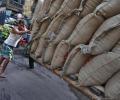
India put up a dull performance among emerging economies this year.

'We need to encourage the next generation of farmers to continue in farming'

Mudasir Ahmed, a businessman from Kashmir, tells Rediff.com's A Ganesh Nadar what he would like to see in Finance Minister Nirmala Sitharaman's Budget.

'Higher valuation remains the only spoiler for equities.'
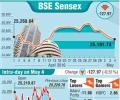
The S&P BSE Sensex plunged 128 points to end at 25,102.

Will a US recession tip the entire metals complex, including Gold Prices, sharply lower in 2008...? Add the falling dollar to rosy growth forecasts from China and what do you get? If you guessed higher commodity prices, you get a gold star. Yet among the big investment institutions, there's mixed opinion about what metals prices will do in 2008.

With auctions unable to proceed, the median onion price declined 17 per cent or Rs 6 a kg to trade at Rs 30 a kg on Monday, with arrivals of around 500 tonnes.

'It is a fiercely fought battle, like our fiery chillies in Guntur.'

American brokerage firm Morgan Stanley on Thursday sharply cut its India FY23 real GDP growth estimate to 7.9 per cent, mainly due to the impact of the Russia-Ukraine conflict on oil prices. Analysts at the brokerage also raised their inflation forecast to 6 per cent - the upper end of the tolerance band for the RBI - and flagged stagflation risks because of the ongoing events. "We believe that the ongoing geopolitical tensions exacerbate external risks and impart a stagflationary impulse to the economy," they said. It can be noted that stagflation involves a stagnancy in output or growth, coupled with high inflation.

India, along with Southeast Asian countries such as Indonesia, is expected to sustain growth in the medium-term in Asia region, replacing China as the key growth driver, Morgan Stanley and Nomura said in two separate reports released on Monday. While Morgan Stanley projected a 6.2 per cent gross domestic product (GDP) growth forecast for India in FY24, Nomura estimated the Indian economy to grow at 5.9 per cent in 2023. "Even with a slowing China, we expect GDP growth in Asia to sustainably outperform other emerging markets and the US. India and Southeast Asia are set to be the fastest-growing economies this decade.
Like other central banks, the Reserve Bank of India is also concerned that spurt in food, commodity and oil prices coupled with fears of US recession could fuel inflation and slow down the economic growth. RBI Governor Y V Reddy and Deputy Governor Rakesh Mohan are also expected to deliberate on the impact of recent policy measures announced by the central bank.
Equity investors have become poorer by more than Rs 18.74 lakh crore as the market continued to remain bearish for the fifth session on the trot on Thursday. The 30-share BSE Sensex tumbled 1,158.08 points or 2.14 per cent to end below the 53,000-level at 52,930.31 points on Thursday. Markets have been falling for five straight sessions and the BSE benchmark has tumbled 2,771.92 points or 4.97 per cent during this period.

Since their highs in September, chemical stocks have underperformed the benchmarks and broader indices over the past month with larger players witnessing a 9-22 per cent fall during this period. Expectations of weak September quarter results amid high inventory, demand woes and weak realisations have led to the underperformance.
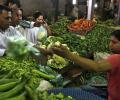
'If you see the composition of items which are causing this spike in prices, most of them have little to do with the kharif harvest, except for pulses and vegetables to some extent.' 'I don't know on what basis the government is claiming that food prices will moderate in the weeks to come.'

'I think some of us, like Mukesh Ambani, myself and those of us who head industrial units, ought to really focus on what we can really do to make the world a safer place, maybe 50 or 100 years from now.' 'For instance, how can we deal with climate change and global warming, right now?' 'The effects of it may not be felt now; in fact, we may pay a price for it today, but it will help the generations to follow.'

April-June 2023 (Q1FY24) was a mixed quarter for India's top family-owned business groups. Three of the big five in terms of revenue reported a year-on-year (Y-o-Y) decline in combined net sales and two saw a Y-o-Y fall in net profits. Combined net sales of all listed companies in the five groups were up just 2.2 per cent Y-o-Y at Rs 6.6 trillion in the quarter, down sharply from the 10.3 per cent in the March 2023 quarter (Q4FY23) and 42.8 per cent in Q1FY23.
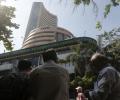
Benchmark indices continued their downtrend on Monday, with the Sensex falling 84.88 points, tracking selling in index majors Infosys and Reliance Industries along with weak global equities. The 30-share BSE benchmark went lower by 84.88 points or 0.15 per cent to settle at 56,975.99 after recovering some lost ground during the fag-end of trade. During the day, it tanked 648.25 points or 1.13 per cent to 56,412.62. The NSE Nifty declined 33.45 points or 0.20 per cent to close at 17,069.10.
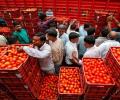
In a first, the Centre will start selling tomatoes at discounted rates in retail markets in the national capital and few other cities from Friday to provide relief to the consumers as the price of the kitchen staple is ruling high at over Rs 200 per kilogram in some parts of the country.

The Reserve Bank of India on Friday raised the benchmark lending rate by 50 basis points to 5.40 per cent to tame inflation.

From its lows in December, the stock of Tata Motors is up about 15 per cent. The gains came on the back of better than expected December volumes in its UK-based subsidiary Jaguar Land Rover (JLR). This coupled with gradual recovery in the global passenger vehicle demand, improving profitability due to product mix and lower commodity costs are expected to be key positives for the company.

India's leading commodity exchange, National Commodity and Derivatives Exchange (NCDEX), and private weather forecasting company Skymet took a significant step towards launching the country's first tradeable weather index on Monday (August 14) by entering into an agreement to deepen their understanding of the impact that weather has on agricultural commodities. The memorandum of understanding (MoU) between NCDEX and Skymet is a profound step in the direction of linking farmers with the weather in a scientific way, according to an official statement. Sources indicate that NCDEX and Skymet will conduct workshops and seminars across the country to educate farmers about how they can scientifically use weather forecasts to hedge risks.

Two-wheeler exports from India fell by 17.8 per cent to 3.65 million units in 2022-23 (FY23), according to data released by the Society of Indian Automobile Manufacturers (Siam) on Thursday. This decline is due to a rise in global inflation and the weakening of economies and currencies in key export markets of Africa, Latin America (LatAm), and South Asia. In contrast to FY23, two-wheeler exports from India jumped 35.4 per cent to 4.44 million units in 2021-22 (FY22).

Some are treating the price correction as akin to a fiscal stimulus that could kick-start a new demand cycle in the economy.

Bank credit offtake is expected to pick up following normalisation of economic activities aided by the government thrust on public expenditure in current fiscal year, a report said. According to the Care Edge report, the gross non-performing assets (GNPA) ratio hit a six-year low of 5.9 per cent in FY22 but remained above the pre-asset quality review of 2015-16. However, it said, India's NPA ratio is one of the highest among the comparable countries despite gradual decline.

According to the Icra report, earnings before interest, tax, depreciation and amortisation margin of its sample declined by 44 basis points on a YoY basis and 23 basis points on a quarter-on-quarter basis to 16.6 per cent.

ONGC was the top loser in the Sensex pack, shedding around 3 per cent, followed by Sun Pharma, PowerGrid, Axis Bank, HDFC Bank, Bharti Airtel and Kotak Bank. NSE Nifty declined 124.10 points to 14,906.05.

Several experts are of the view that inflationary pressure, including that in food items, may build from October with economic activity gathering steam. However, the price movement in three key items of tomato, onions and potatoes, commonly known as TOP, may give some solace in the months to come. Traders and market watchers said the price movement in all the three will remain within the band sans any unusual spikes.

Deflation masked the rise in food inflation to a 5-month high.

After a gap of more than 13 years, the National Commodity and Derivatives Exchange (NCDEX) is all set to launch a futures contract in groundnut (in shell) to fill a void in oilseeds complex futures because of a ban in several high-volume commodities.

Shares of public sector enterprises have corrected by up to 22 per cent month-to-date until March 19, 2024. Analysts attribute this steep fall to the valuation exuberance seen after a sharp run in these counters last year and suggest investors remain selective regarding the stocks in this space. "The rally in public sector undertaking (PSU) stocks has been stretched and sharp, although it is somewhat justified by improvements seen in earnings, operations, balance sheets, and overall profitability.

Corporate India's credit quality showed a sharp improvement in the second half of FY22, but high input prices and withdrawal of pandemic-related relief measures can pose pressures in the new year, rating agencies said on Friday. Crisil Ratings, which rates a large number of financial sector entities, reported an improvement in the credit ratio -- the number of upgrades to downgrade -- to 5.04 times in the second half of this financial year, from the 2.96 per cent in the first half of the fiscal. It attributed the improvement to a sustained rebound in demand, which lifted revenues of most sectors to pre-pandemic levels and proactive relief measures by the government that cushioned the pandemic blow.
